

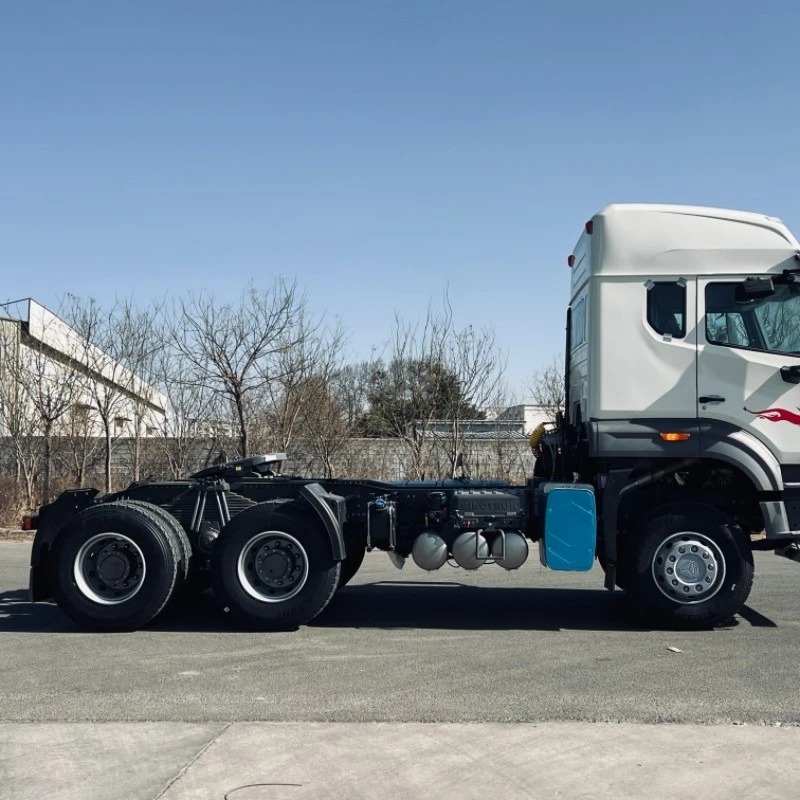
Choosing the Drivetrain Configuration: 6×4 is the Standard for Heavy-Duty Hauling
A 6×4 configuration consists of one steerable front axle and two driven rear axles. Compared to 4×2 tractor units, it offers superior load-bearing capacity and traction. When hauling containers, tankers, or dump semi-trailers across muddy, sandy, or uneven terrain, the dual driven axles-equipped with differential locks-significantly reduce the risk of getting stuck. For transport operations with a gross weight exceeding 40 tons, the 6×4 model is the preferred choice.
Engine Selection: Mechanical-Pump Engines Are Better Suited for the African Market
Diesel quality is poor in many parts of Africa. High-pressure common-rail engines have strict fuel requirements and are prone to failure when using low-quality fuel.
In contrast, Euro II mechanical-pump engines offer greater tolerance for contaminated fuel. Their simple design and minimal electronic components make them easier for local mechanics to service, and spare parts are widely available. The MC11 and WP12 are proven engine models that have gained widespread recognition among African fleet operators.

Left-Hand Drive (LHD) / Right-Hand Drive (RHD): Must comply with the traffic regulations of the destination country.
Verify the traffic rules of the destination country-LHD or RHD-before purchasing. Some African countries require RHD vehicles, necessitating the purchase of RHD tractor units. We offer both LHD and RHD versions for our new and refurbished used vehicles to ensure compliance with local regulations.

Key Chassis Specifications for Rough-Road Operations
Frame: High-strength, thickened frames are preferred for superior torsional resistance under sustained heavy loads.
Axles: A 13-ton heavy-duty rear axle is the standard configuration; a 16-ton reinforced axle is available as an option for extreme overloading conditions.
Suspension: Multi-leaf spring suspension is the top choice for Africa due to its durability, low maintenance costs, and suitability for unpaved roads; air suspension, while lighter, entails high maintenance costs and is unsuitable for harsh road conditions.


1. Check engine condition: Listen for abnormal noises and inspect for oil leaks.
2. Test the differential lock and braking system; these are critical for driving safety.
3. Inspect the chassis frame to ensure there are no cracks or deformations caused by heavy loads.
4. Verify the complete set of export documentation to ensure smooth customs clearance.
A quality truck is defined by more than just a low purchase price; a lower failure rate and affordable maintenance costs are what truly enable fleet operators to maximize long-term profits. The HOWO TX and NX series tractor units are widely used across Africa precisely because they are well-suited to local operating conditions.


